
illumionONE
Operando imaging made simple. See, measure and analyse how battery materials behave, particle by particle, on a bench in your own lab.
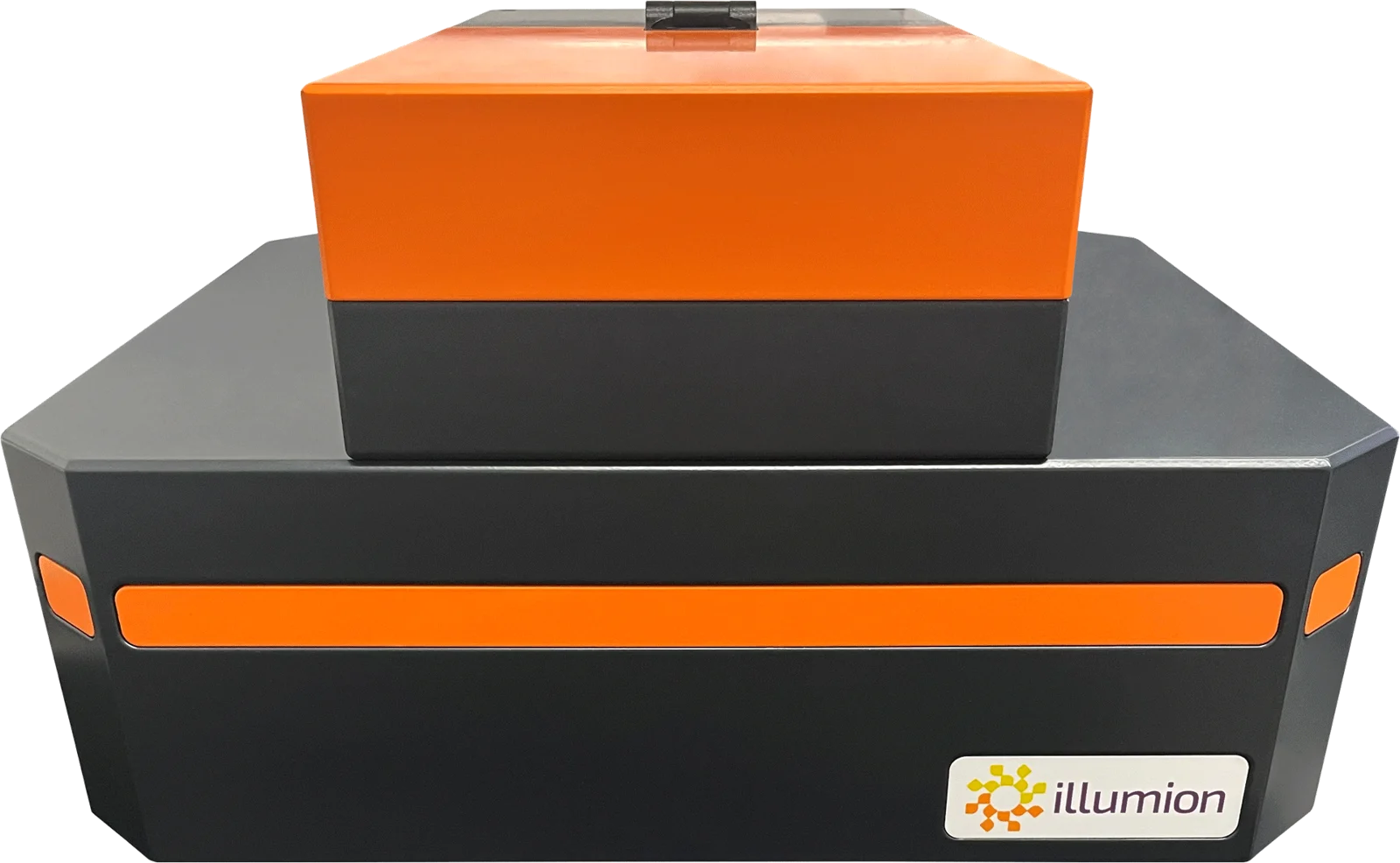
Operando imaging
See what is happening, where and when, while the cell is cycling. Single-particle resolution across the electrode.
Bench-top system
Compact and easy to integrate into any lab, accessible 24/7. Coin cells load in seconds via a magnetic cartridge.
Material agnostic
Compatible with Li-ion and beyond Li-ion chemistries such as Na-ion, for anodes and cathodes alike.
How charge photometry works
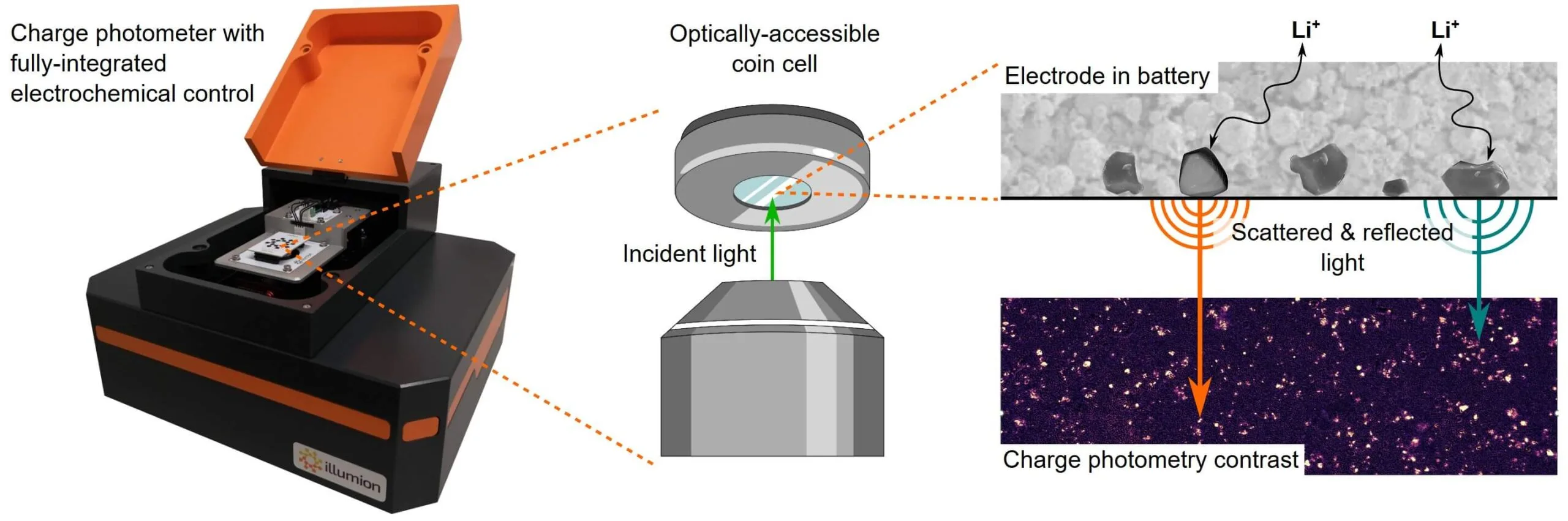
Charge photometry uses the principles of optical interference reflection imaging to detect the light scattered by individual particles across an electrode. As ions flow in and out, the electronic structure of the material changes and so does the intensity of the scattered light. That change reveals the local state of charge of each particle.
Because it is optical, it also tracks morphology. In one illumionONE recording, silicon particles cycled at C/20 can be seen expanding and then fracturing into smaller fragments.
Load
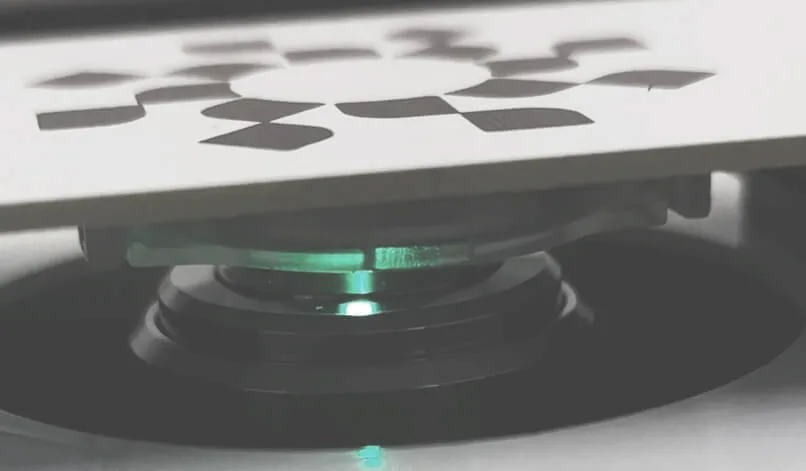
The electrode stack is assembled into the optically accessible coin cell and mounted on illumionONE.
Cycle
Define electrochemical test protocols in the acquisition software, which controls the integrated potentiostat.
Analyse
Analyse charge photometry data alongside the synchronised electrochemistry in illumion’s analysis software.
What users say
“We achieved valuable in-cycling data of our anode material particles without any of the typical headache involved with setting up the technique.”
“They provide key insights about spatial heterogeneity of the electrode while in operation, which are very difficult to access via conventional X-ray or neutron methods.”
“A simple to implement measurement technique that offers insights into the electrochemical behaviour at the single-particle level.”
See illumionONE run on your material
Book a demo and we will walk you through a measurement, from loading the coin cell to the particle map.
Request a demo